Email remains one of the highest-ROI channels available to a small or mid-size business, and the reason most owners don’t experience it that way is simple: they’re not using it as a system. They send the occasional newsletter, they push out a promotion when they remember, and they treat email as an afterthought rather than an asset. The businesses that have actually figured out email marketing aren’t sending more emails than everyone else. They’re running automated sequences that work in the background, converting leads and retaining customers while the owner runs the business.
This post is about the specific email automation sequences that produce measurable revenue for Florida SMBs, how to build them correctly, and why email marketing automation deserves a meaningfully larger share of attention than most businesses give it.
Why Email Still Outperforms Almost Everything Else
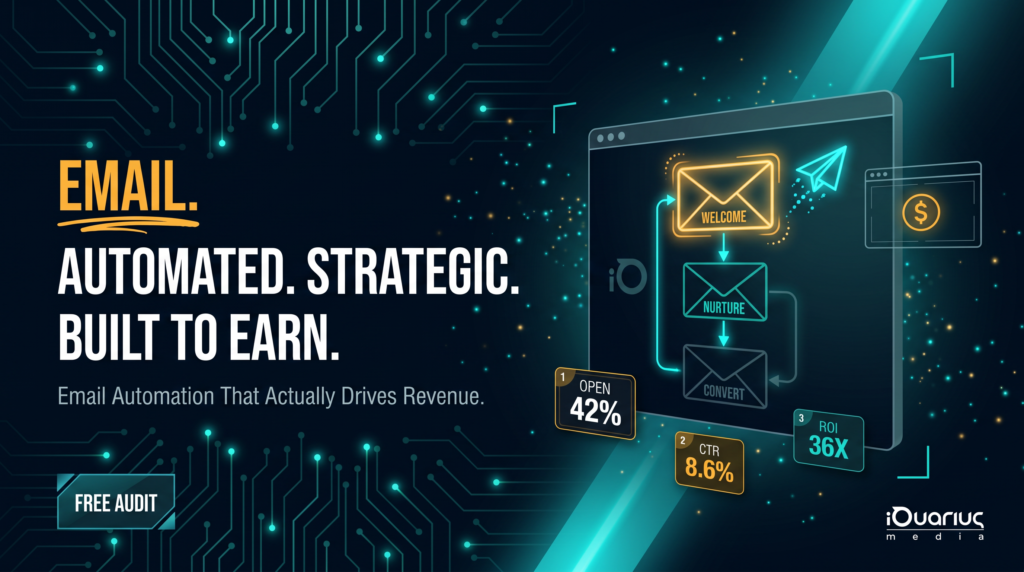
The headline statistic on email marketing has been roughly consistent for years: email delivers somewhere between $36 and $42 in returned revenue for every $1 spent. No other channel comes close on that ratio. The reason isn’t that email is glamorous or trendy — it’s that email is owned. Your email list is an asset you control. Social media followers can disappear when an algorithm shifts or a platform changes its rules. Paid traffic stops when the budget stops. Your email subscribers are yours, and you can reach them directly, repeatedly, at almost no marginal cost.
For Florida small businesses competing in markets where customer acquisition costs continue to climb, that economic structure matters significantly. The cost of acquiring a new customer through Google Ads or Meta Ads has roughly doubled across most categories in the past five years. The cost of communicating with someone who is already on your list is effectively zero. Businesses that have built and nurtured their email list are operating with a structural advantage that most of their competitors don’t have.
The catch is that the ROI math only works if the email program is actually running. A neglected email list is not an asset. It’s a liability accumulating dust. The businesses extracting the ROI numbers above are running active programs with automated sequences doing most of the work continuously.
What Email Marketing Automation Actually Means
Email marketing automation refers to email sequences that are triggered by specific subscriber actions and then deliver pre-built communications without ongoing manual effort. Someone fills out a form on your website — they enter a welcome sequence. Someone abandons a cart on your e-commerce site — they receive an abandoned cart sequence. A customer hasn’t purchased in 90 days — they enter a re-engagement sequence. The business owner builds these sequences once, and they run continuously for every subscriber who triggers them.
The distinction from traditional email marketing is the leverage. A traditional newsletter requires the owner or marketing team to plan, write, and send each communication. An automated sequence runs without that ongoing effort. The work happens upfront — in the build — and the returns compound for as long as the sequence runs and continues to be relevant.
This is the core principle that makes email automation different from most marketing activities. It’s one of the few marketing investments where the work decreases over time while the results continue to accumulate.
The Welcome Sequence: The Highest-ROI Email a Business Sends
If a business is going to build only one automated email sequence, it should be the welcome sequence. The numbers consistently bear this out — welcome emails generate open rates roughly four times higher than typical broadcast emails and revenue per email significantly higher than any other category. The reason is intent. Someone who just subscribed to your list is at their peak interest level. They’ve just signaled that they want to hear from you. The next 72 hours is the highest-leverage window you’ll ever have with that subscriber.
A strong welcome sequence for a Florida SMB typically runs three to five emails delivered over the first week or two after signup. The structure that consistently produces results follows a clear logical arc.
The first email is the immediate welcome — sent within minutes of signup. This email confirms the subscription, delivers whatever the subscriber expected (a lead magnet, a discount code, an introduction to the business), and sets expectations for what they’ll receive going forward. The first email’s job is to make a strong first impression and confirm the subscriber made a good decision.
The second email, typically sent a day or two later, deepens the relationship by telling the brand’s story. Who the business is, what they stand for, why they do what they do. For service businesses, this is where the founder’s story, the company’s origin, or the philosophy that drives the work belongs. For product businesses, this is where the brand identity gets reinforced beyond the transaction.
The third email shifts toward education or value delivery — a useful tip, a relevant resource, an insight specific to the subscriber’s likely problem. The purpose is to demonstrate competence and create the impression that this email list is worth opening because it actually delivers something.
The fourth email introduces social proof — case studies, testimonials, customer stories. The subscriber has now received value and gotten to know the brand. They’re ready to be shown what working with the business actually produces.
The fifth email moves toward a soft sale or next step. Not aggressive, but clear. The subscriber has been welcomed, oriented, educated, and shown evidence. The natural next move is to make it easy for them to take a tangible action — book a consultation, make a first purchase, request a proposal.
The welcome sequence is the highest-priority build for any small business email program. Done well, it converts a meaningful percentage of new subscribers into actual customers — often in numbers that surprise business owners who haven’t measured it before.
Abandoned Cart and Browse Abandonment Sequences
For e-commerce businesses, abandoned cart sequences are not optional. They’re among the highest-ROI assets a store can build, and the businesses that don’t have them are leaving substantial revenue on the table.
Cart abandonment rates across e-commerce average around 70%. That number means for every 100 shoppers who add something to a cart, roughly 70 of them leave without completing the purchase. A well-built abandoned cart sequence recovers a measurable percentage of those lost sales — typically 10% to 30% — at near-zero marginal cost.
The structure is straightforward.
- The first email goes out within an hour or two of abandonment with a simple, low-pressure reminder.
- The second goes out 24 hours later, often introducing a small incentive to complete the purchase.
- The third, if used, goes out around 72 hours later as a final nudge with urgency framing.
Three emails. Built once. Running continuously for every cart that gets abandoned.
Browse abandonment is the related sequence for shoppers who viewed products but didn’t add anything to a cart. The intent signal is weaker than cart abandonment, but the volume is significantly higher, and a well-structured browse sequence can produce meaningful incremental revenue at the top of the funnel.
Both sequences depend on tracking infrastructure and a customer data integration that connects the e-commerce platform to the email system. This is the kind of work that an integrated platform like iQComms handles natively — combining the email infrastructure with the customer data and behavioral triggers needed to make these sequences function.
Post-Purchase Sequences: Where Retention Lives
The work most businesses neglect is everything that happens after the first purchase. Acquiring a new customer costs five to seven times more than retaining an existing one, depending on which study you cite, and the businesses that systematically nurture customers after the first transaction operate with margins their competitors can’t match.
A post-purchase sequence typically begins with the order confirmation — but the strategic version of that email does more than confirm the transaction. It reinforces the buying decision, sets expectations for what happens next, and begins the relationship that converts a one-time buyer into a repeat customer.
The follow-up emails serve different purposes depending on the business model. For product businesses, this is where review requests live, where cross-sell and upsell sequences operate, and where the second-purchase nudge happens at the moment the buyer is most likely to need another order. For service businesses, this is where onboarding happens, where expectations get reinforced, and where the foundation gets laid for referrals and reviews.
Review request emails deserve particular attention. The percentage of customers who leave reviews when asked systematically through a well-timed automated email is dramatically higher than the percentage who leave reviews unprompted. For local Florida businesses where review volume directly affects Google ranking and consumer trust, an automated review request sequence is one of the more obvious wins available.
Re-Engagement: What to Do With a List That’s Gone Cold
Most email lists accumulate inactive subscribers over time. The data on this is consistent — a typical email list will see roughly 25% of subscribers go inactive each year. Without an active re-engagement strategy, list quality erodes, deliverability declines, and email open rates trend downward across the board.
A re-engagement sequence targets subscribers who haven’t opened or clicked in a defined period — typically 90 to 180 days. The sequence acknowledges the silence honestly and offers a reason to come back. Sometimes it’s a special offer. Sometimes it’s a “we noticed you’ve been quiet — are you still interested?” framing. The goal is to either reactivate the subscriber or cleanly remove them from the active list.
The unpopular but mathematically correct part of this is the willingness to actually remove inactive subscribers. Larger lists feel better than smaller ones, but inactive subscribers hurt deliverability across the rest of the list. The businesses with the highest-performing email programs are aggressive about list hygiene — they’d rather have 5,000 engaged subscribers than 50,000 mostly-inactive ones.
Why Platform Integration Matters More Than Platform Choice
The email marketing software landscape has dozens of options — Mailchimp, ActiveCampaign, Klaviyo, Campaign Monitor, ConvertKit, HubSpot, and many others. They all send emails. The meaningful question isn’t which platform sends prettier emails. It’s which platform integrates cleanly with the rest of the marketing stack — the CRM, the website, the e-commerce platform, the analytics infrastructure.
This is the gap that all-in-one platforms like iQComms are designed to close. When the email system, the CRM, the customer data, the website behavior, and the reporting all live in one integrated environment, the automation possibilities expand dramatically — and the friction of building them collapses. Sequences can be triggered by any data point in the system. Customer behavior on the website can immediately inform what email they receive next. Sales conversations can be triggered by email engagement. The whole stack operates as one system rather than a collection of disconnected tools held together by Zapier integrations and hope.
For Florida SMBs that have grown out of basic email marketing and are looking to operate email as part of a coordinated system, the integration question is where the real strategic decision lives.
What Determines Whether Email Marketing Actually Earns Revenue
A few principles separate email programs that produce serious revenue from those that don’t.
- List quality matters more than list size. A targeted, engaged list of 2,000 subscribers will outperform an indifferent list of 20,000 every time. The work of building a quality list — through valuable lead magnets, clear opt-in promises, and disciplined list hygiene — pays back in every subsequent sequence and broadcast.
- Segmentation is where mature email programs find their edge. Sending the same message to everyone produces mediocre results. Segmenting by behavior, purchase history, interest, or stage in the customer journey produces dramatically better outcomes because the message becomes meaningfully more relevant to each segment.
- Subject lines deserve disproportionate attention. The best email body in the world doesn’t matter if the email doesn’t get opened. Subject line testing — even informal — typically produces email open rate improvements that compound across every sequence.
- Consistency beats brilliance. A business sending solid emails consistently outperforms one sending occasional brilliant emails sporadically. The compounding effect of regular communication with an engaged list is what produces email’s ROI numbers, not any single campaign.
Frequently Asked Questions
What is email marketing automation for small business?
Email marketing automation refers to pre-built email sequences that send automatically when subscribers take specific actions — signing up, abandoning a cart, making a purchase, going inactive. Once built, the sequences run continuously without ongoing manual effort, delivering relevant communications to subscribers at the moments they’re most likely to convert.
What is the most important email automation sequence to build first?
The welcome sequence. New subscribers are at peak interest, open rates on welcome emails are dramatically higher than typical broadcasts, and a well-built welcome sequence converts a meaningful percentage of new subscribers into customers within their first week or two on the list.
How much does email marketing automation cost?
Platform costs range from free for very small lists on basic platforms to several hundred dollars per month for more sophisticated platforms at higher list sizes. The more meaningful cost is the build — investing in sequence design, copywriting, and integration setup. A foundational automation setup for an SMB typically requires a few thousand dollars in initial development to produce returns that significantly exceed that investment.
What is a good email open rate for small business email marketing?
Average open rates across industries typically fall between 20% and 30%, with significant variation by category. Welcome emails routinely exceed 50%. Re-engagement campaigns typically run lower. More important than the absolute open rate is the trend — a program with improving open rates over time is producing healthy results regardless of where it started.
How often should a small business send marketing emails?
The right cadence depends on the business and the audience, but for most SMBs, one to four broadcasts per month plus active automated sequences works well. Automated sequences operate independent of the broadcast schedule and deliver communications based on subscriber behavior rather than calendar timing.
What is the difference between an email broadcast and an email sequence?
A broadcast is a single email sent to a defined segment of the list at a specific time — a newsletter, a promotion, an announcement. A sequence is a series of emails triggered by a subscriber action and delivered automatically over time. The most effective email programs use both — broadcasts for timely communication and sequences for the systematic conversion and retention work.
Email is the marketing channel that rewards patience and discipline more than any other. The businesses that have built serious email programs aren’t doing anything exotic. They’ve built the foundational sequences, they segment their list intelligently, they communicate consistently, and they treat the email list as the asset it actually is. Over time, that approach compounds into something that produces meaningful, predictable revenue with margins no acquisition channel can match.
If you’d like to talk through what an email marketing automation program would look like for your business — including how iQComms can run the email, CRM, and customer data side as a single integrated system — iQuarius Media builds email programs for Florida businesses that want the channel to actually produce returns.